
Know your kidney risk before symptoms appear.
INNOVATIO-ND2 is a predictive test based on protein biomarkers. If you have type 2 diabetes, it tells you and your doctor whether your kidneys are at risk over the next 4 years, so you can act in time.
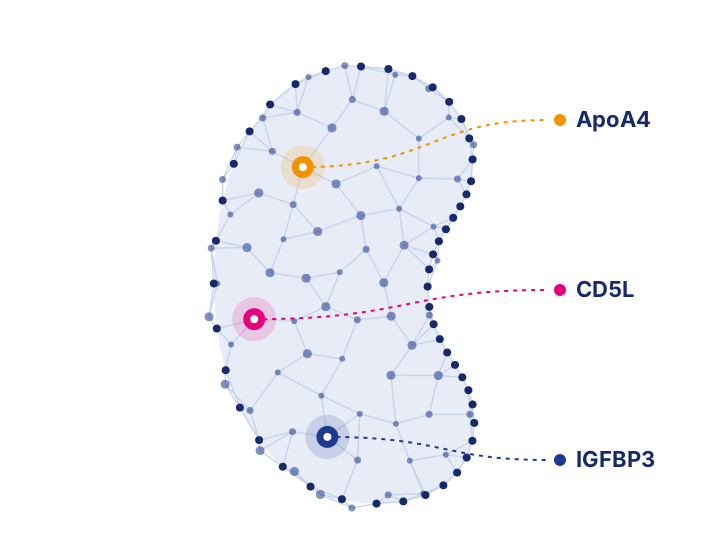
What is diabetic kidney disease?
It is kidney damage caused by diabetes, also called diabetic nephropathy or chronic kidney disease due to diabetes. About 1 in 3 adults with diabetes in the U.S. has it.
The kidneys filter waste and extra water from the blood. High blood sugar and high blood pressure slowly damage their blood vessels, and the kidneys lose their ability to filter. In severe cases this leads to kidney failure, treated with dialysis or a transplant.
Routine tests detect damage only once it has happened. They cannot predict who will develop it.
Predict before the damage
Using the PromarkerD™ algorithm, INNOVATIO-ND2 identifies the risk before symptoms appear. In clinical studies, the test identified 86% of people with diabetes and no kidney damage who developed it over the next four years.
How often should I get tested?
Your doctor decides. As a guide, based on your result:
Can I improve my next results?
Yes. After your first test, your doctor will give you an action plan. Following it (diet, exercise, quitting smoking, controlling blood pressure, cholesterol and sugar, and taking your medications) can lower your risk, and the test will show it in your next results.
Your risk is in your hands!
How to get tested
- 1Ask your doctor for the order. Download the order form (in Spanish) and bring it.
- 2Go fasting to a laboratory in your community. See laboratories by town.
- 3Share the result with your doctor to agree on a plan.
Covered by Traditional Medicare, MCS (Advantage and commercial) and MMM (Advantage and Vital). Check with your plan.